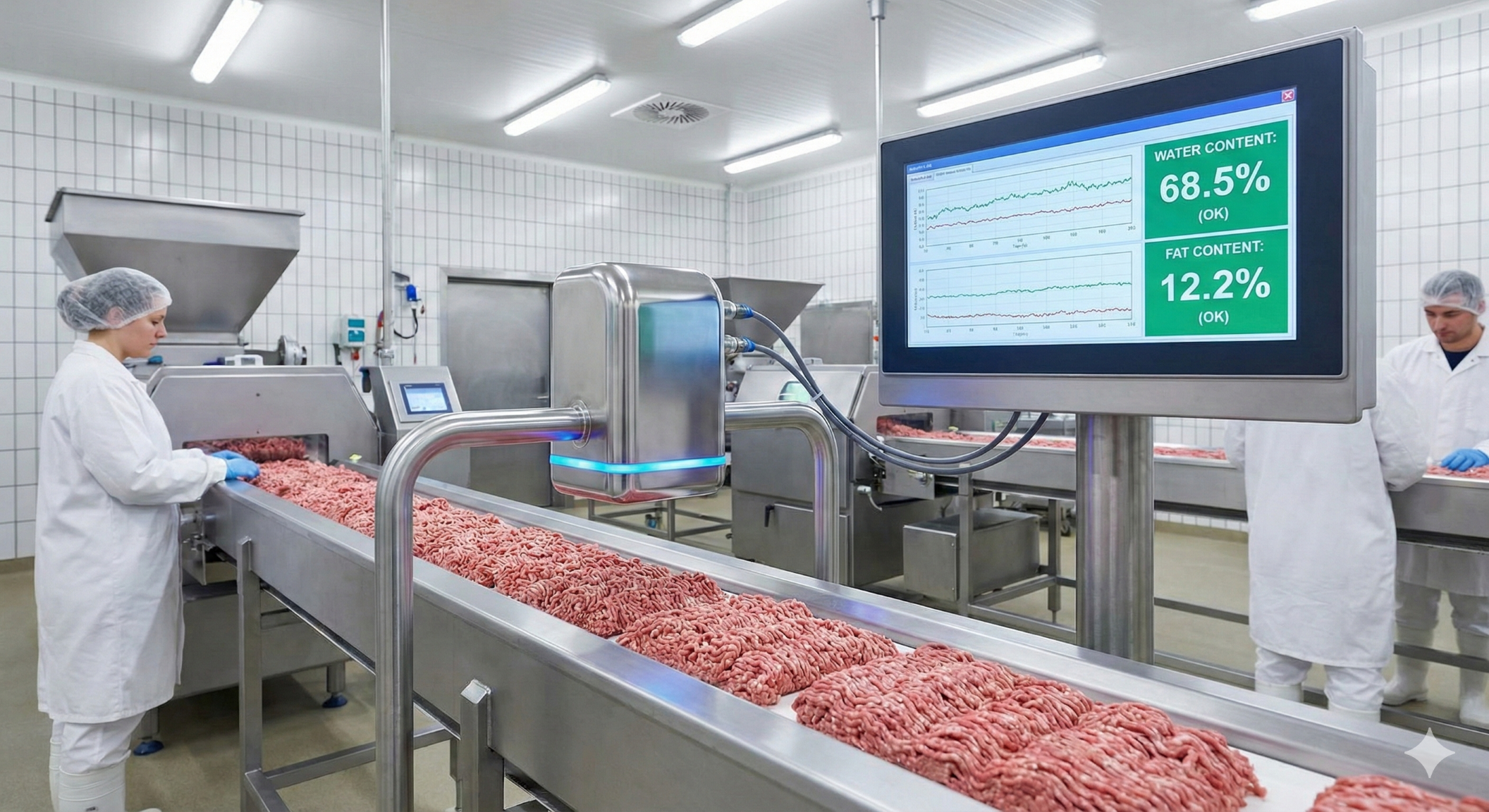
The most common use of Near-Infrared (NIR) spectroscopy in this field is determining the chemical makeup of meat. By scanning a sample, producers can instantly measure:
Fat Content: Essential for labeling ground meat and selecting cuts.
Moisture and Protein: Critical for maintaining consistency in processed meats like sausages or deli slices.
Water-Holding Capacity: A key indicator of how juicy the meat will be after cooking.
Food fraud is a global concern. IR spectroscopy acts as a molecular fingerprinting tool to detect:
Species Adulteration: Ensuring that "100% Beef" isn't secretly mixed with cheaper meats.
Frozen-Thawed Detection: Identifying if meat labeled as "fresh" has been previously frozen, which affects both texture and safety.
Contamination: Detecting high levels of bacteria or foreign substances before the product reaches the shelf.
By adopting infrared technology, the meat industry can reduce waste, ensure higher safety standards, and provide consumers with a more consistent product. It is a win-win for both the bottom line and the dinner table.
Chapter: 8 — Meat and Meat Products
Authors: Rahul Reddy Gangidi and Andrew Proctor
Book: Infrared Spectroscopy for Food Quality Analysis and Control, Edited by Da-Wen Sun