In the beverage industry, consistency is the key to brand loyalty. Whether it’s a premium orange juice or a global soft drink brand, consumers expect the same taste, sweetness, and nutritional value every time they open a bottle. Traditionally, maintaining this consistency required constant sampling and laboratory titration.
Today, Infrared (IR) Spectroscopy is transforming the production line into a real-time laboratory. By using light to "see" the chemical signature of beverages, manufacturers can ensure quality without ever slowing down production.
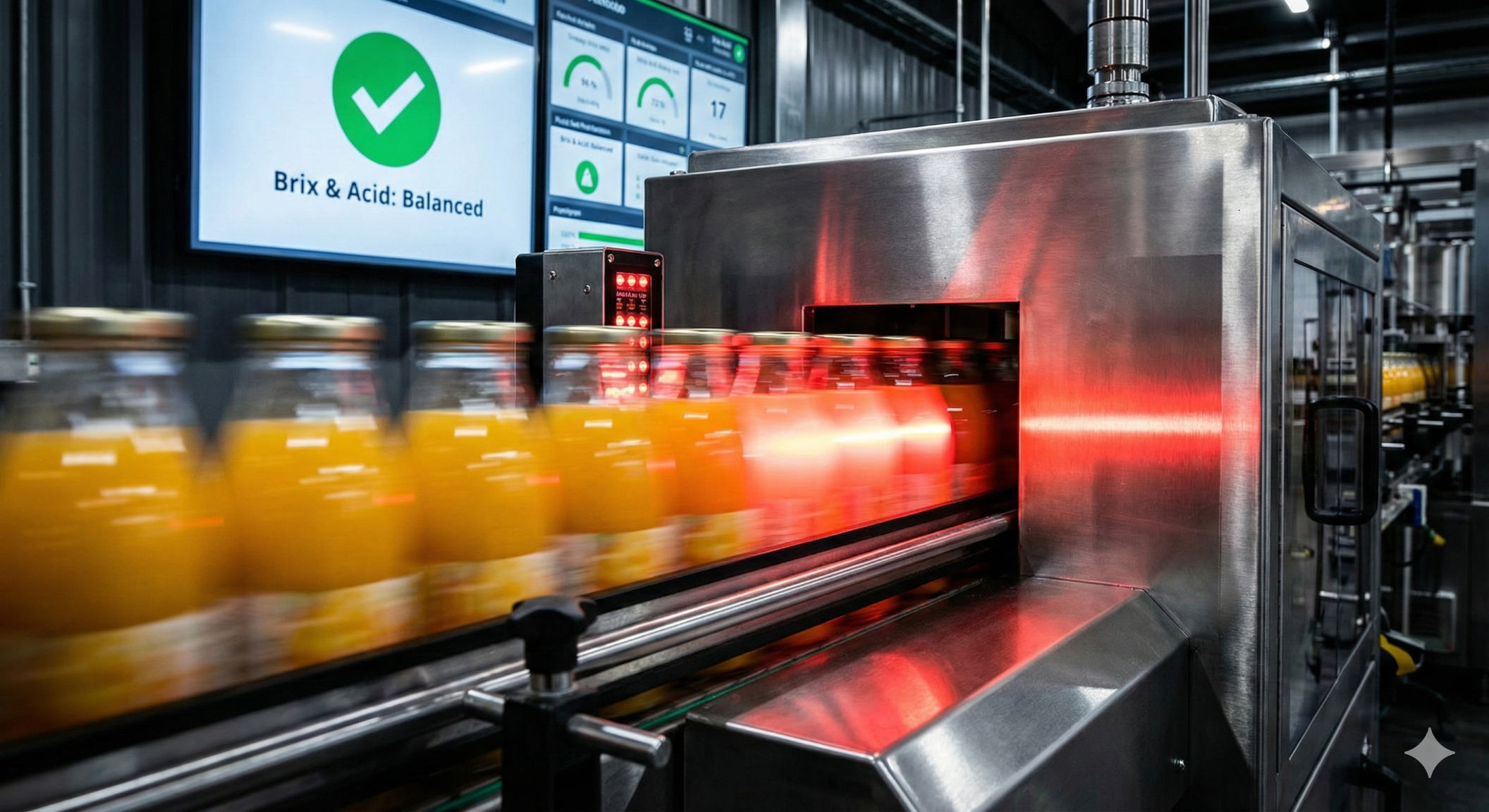
The "perfect taste" of a beverage is a delicate balance between sugar (Brix) and acid.
Instant Brix Measurement: Near-Infrared (NIR) sensors monitor sugar levels in real-time as juices are blended, allowing for immediate adjustments to ensure every batch is identical.
Acidity and pH Control: IR technology accurately measures organic acids, ensuring the "tanginess" of the juice meets the brand's specific profile.
Vitamin C Verification: For fortified juices, spectroscopy can monitor the concentration of Vitamin C (ascorbic acid) to ensure that the nutritional claims on the label are always accurate.
Fruit juices are among the most expensive ingredients in the beverage industry, making them a target for adulteration.
Identifying Dilution: IR spectroscopy acts as a molecular fingerprint to detect if a premium juice has been diluted with water or cheaper fruit concentrates.
Sugar Source Detection: Advanced spectral models can distinguish between the natural sugars found in fruit and "added" sugars from corn syrup or beet sugar.
Pulp Wash and Peel Extract: Spectroscopy can even identify if manufacturers have added inferior "pulp wash" or peel extracts to artificially boost the volume of a juice.
Once a bottle is sealed, the clock starts ticking. IR technology helps monitor the product's health throughout its life.
Microbial Detection: Infrared sensors can spot the early chemical signs of fermentation or bacterial growth before any visible signs of spoilage appear.
Packaging Integrity: IR can even be used to check the seal and gas composition inside the bottle to ensure the product remains fresh for its entire shelf life.