In the food industry, precision and speed are the two pillars of quality control. Traditional chemical methods for analyzing water content—while accurate—are often slow, destructive, and involve hazardous reagents. A foundational review published in Food Chemistry by Hans Büning-Pfaue highlights a transformative alternative: Near-Infrared Spectroscopy (NIRS).
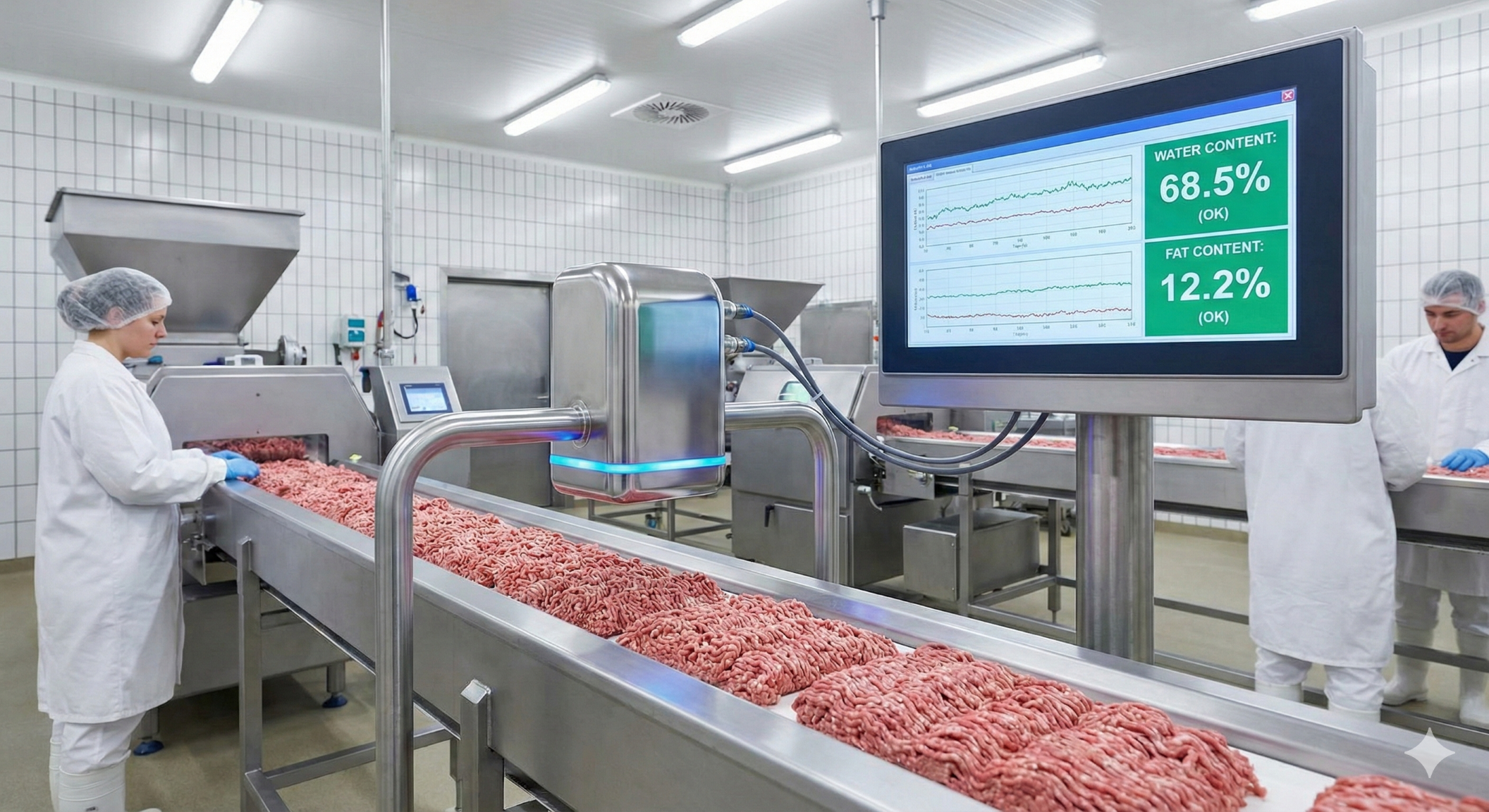
NIRS has evolved over the past few decades into a routine method for agricultural commodities and food constituents. Its primary advantage lies in its efficiency throughout the production chain, from the purchase of raw materials to the final control of finished products.
Key benefits of adopting NIRS technology include:
Non-Destructive Testing: It is a physical method that requires minimal to no sample preparation, preserving the product for further use.
Multi-Analytical Capability: Several different determinations (such as water, fat, and protein) can be made simultaneously from a single scan.
High Precision: Modern NIR instruments boast an exceptional signal-to-noise ratio, typically reaching 10,000:1.
Eco-Friendly: Unlike traditional chemistry, NIRS requires no reagents and produces zero waste.
- Hydrogen Bonding: Frequencies and intensities of water bands alter based on the strength of hydrogen bonds and hydration states within the food.
- Sample Temperature: Temperature changes the random motion of water molecules, breaking or forming hydrogen bonds and shifting absorption bands.
The versatility of NIRS allows it to be used in various "hostile" or high-speed environments:
Meat Grinding: On-line systems can assess the chemical composition (water, fat, and protein) of meat during the grinding of industrial-scale batches.
Cottage Cheese Production: In-line measurements allow for real-time monitoring of solid content, preventing entire batches from being produced with the wrong specifications and saving thousands of kilograms in potential waste.
Fermentation Monitoring: NIRS is used for real-time control of moisture levels during compost or food fermentation, ensuring the process remains at an optimal rate.
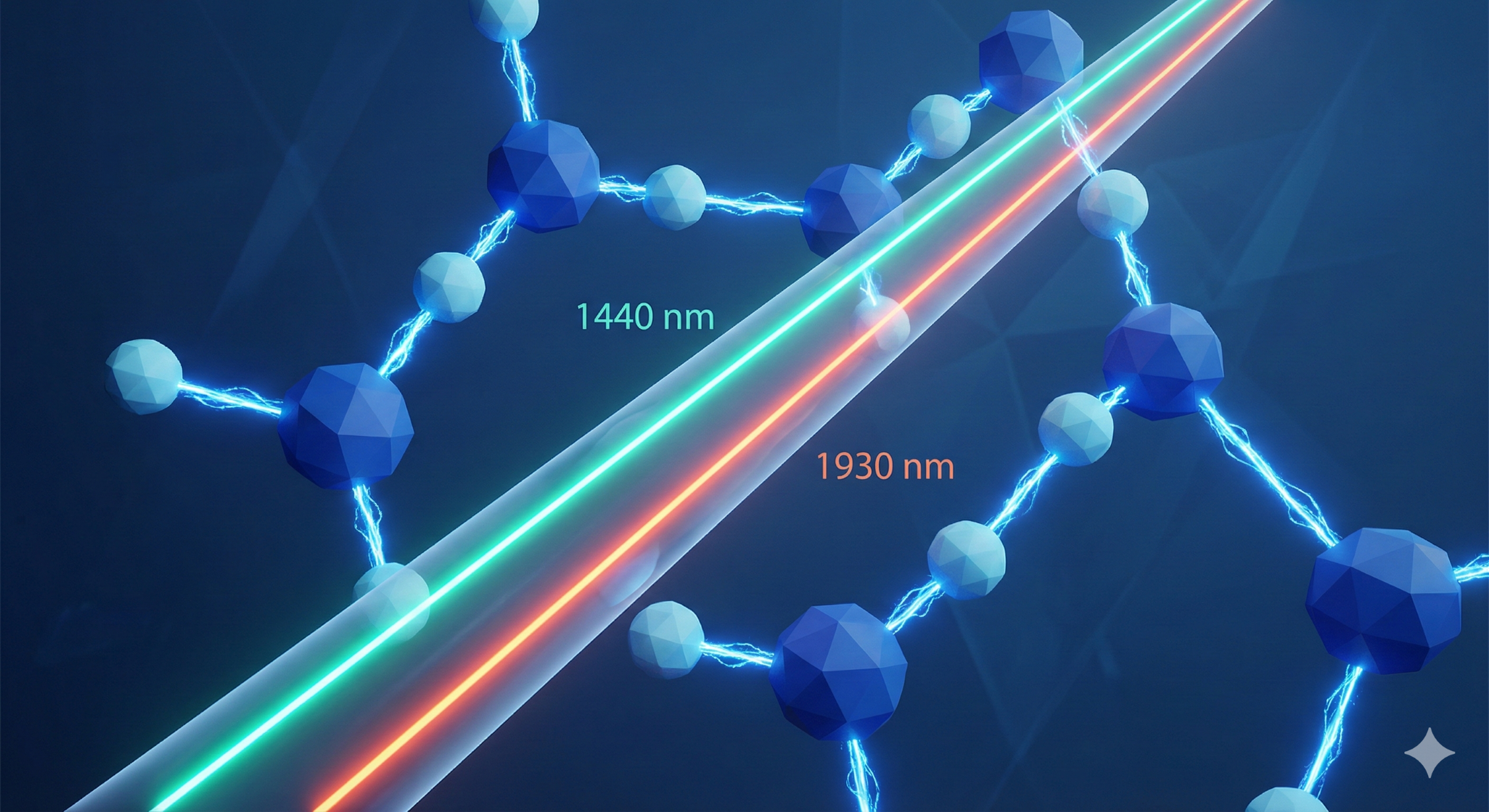
While NIRS requires complex initial calibration and has lower sensitivity to minor constituents (below 0.1%), its ability to provide rapid, cost-effective, and homogeneous results across global networks makes it an indispensable tool for the modern food scientist.
Source: Büning-Pfaue, H. (2003). Analysis of water in food by near infrared spectroscopy. Food Chemistry, 82(1), 107-115.