In the produce aisle, looks can be deceiving. A vibrant red apple might be mealy inside, and a green peach might be surprisingly sweet. For decades, the only way to truly know the quality of fruits and vegetables was to cut them open—a process that is slow, wasteful, and impossible to do for every item.
Today, Infrared (IR) Spectroscopy is solving this problem by allowing producers to "see" inside produce without ever touching it.
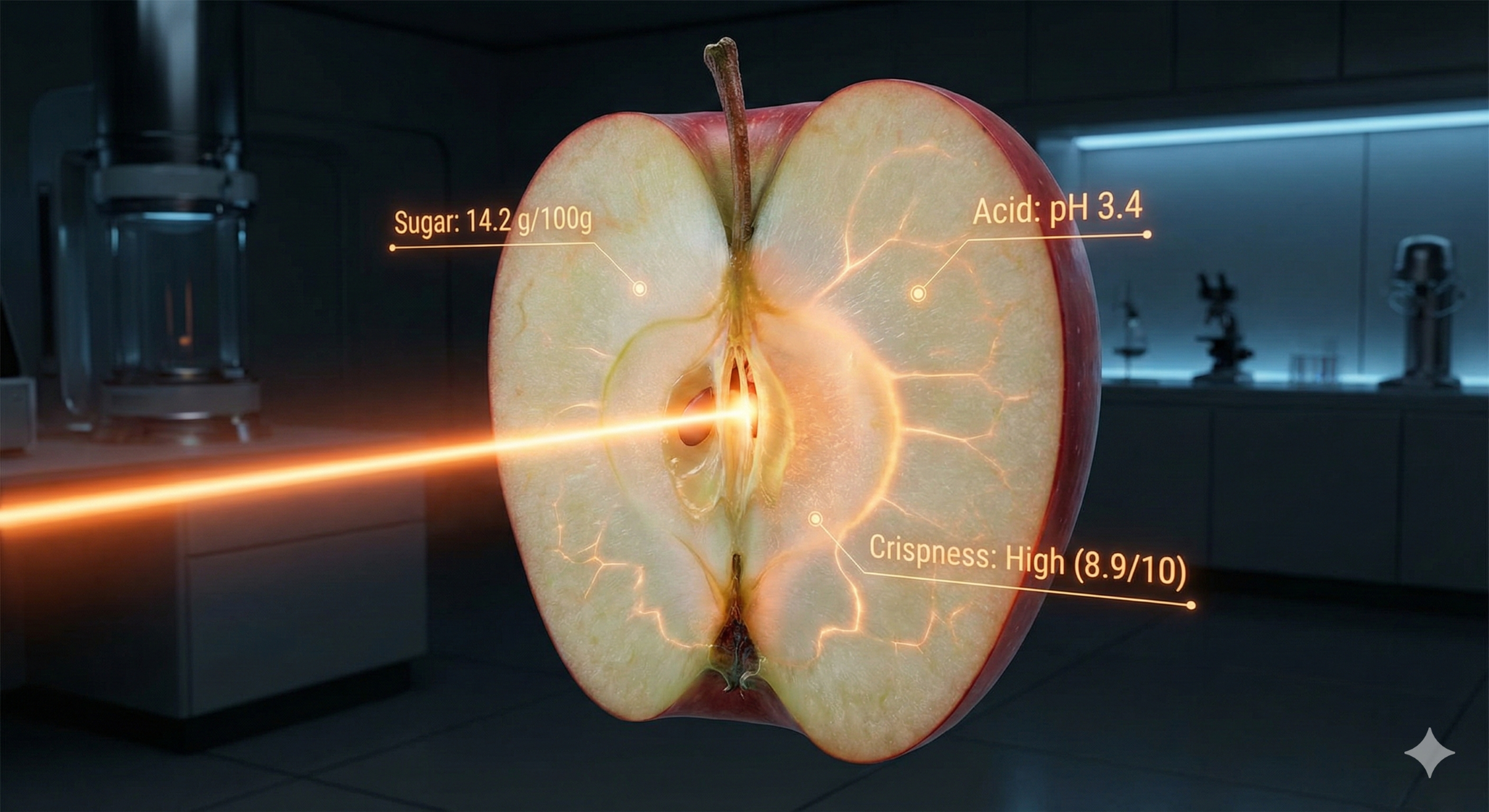
The most valuable metric for many fruits is the Soluble Solids Content (SSC), primarily sugar.
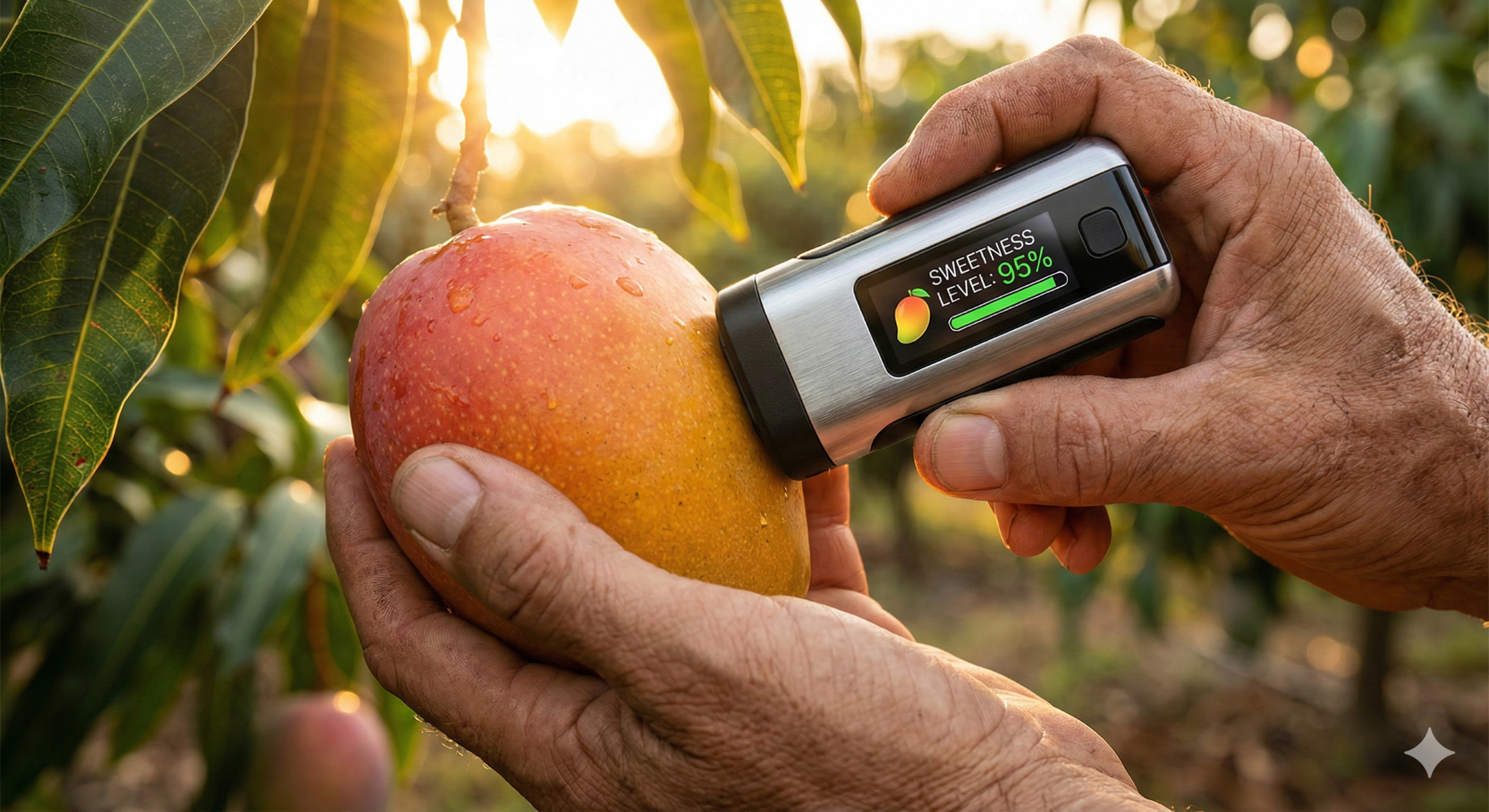
Beyond Appearance: NIR (Near-Infrared) sensors can measure the sugar levels and acidity of fruit while it is still on the tree or moving through a sorting facility.
Perfect Timing: Farmers use handheld IR devices to determine the exact day to harvest, ensuring that fruit reaches the store at peak flavor.
Some of the biggest losses in the produce industry come from "internal browning" or "watercore"—defects that are invisible from the outside.
X-Ray Vision for Food: IR spectroscopy can penetrate the skin of apples, pears, and potatoes to detect internal rot, hollow hearts, or insect damage.
Automatic Sorting: High-speed cameras in packing houses use specific infrared wavelengths to automatically eject defective produce from the line, ensuring only the best items reach the consumer.
Retailers need to know how long a shipment of vegetables will last on the shelf.
Dry Matter Content: For produce like avocados or potatoes, measuring "dry matter" using IR is a key indicator of maturity and future shelf-life.
Texture Analysis: Spectroscopy can monitor the degradation of pectin and cell walls, giving a scientific prediction of how quickly a fruit will soften.
The Future of the Produce Aisle
By integrating infrared technology into the supply chain, the agriculture industry is reducing food waste and ensuring that "Quality" is a guarantee, not a guess. For consumers, this means more flavorful fruit and fresher vegetables every time they shop.