Seafood Quality in the Digital Age: Using Infrared Spectroscopy for Fish Analysis
In the global seafood market, freshness and authenticity are everything. From the deck of a fishing vessel to the supermarket shelf, maintaining high standards for fish quality is a race against time. Traditional methods for checking fish—like chemical tests or sensory panels—can be slow or inconsistent.
Infrared Spectroscopy (IR) is stepping in as a powerful, non-destructive tool that allows the seafood industry to analyze fish quality in seconds without damaging the product.
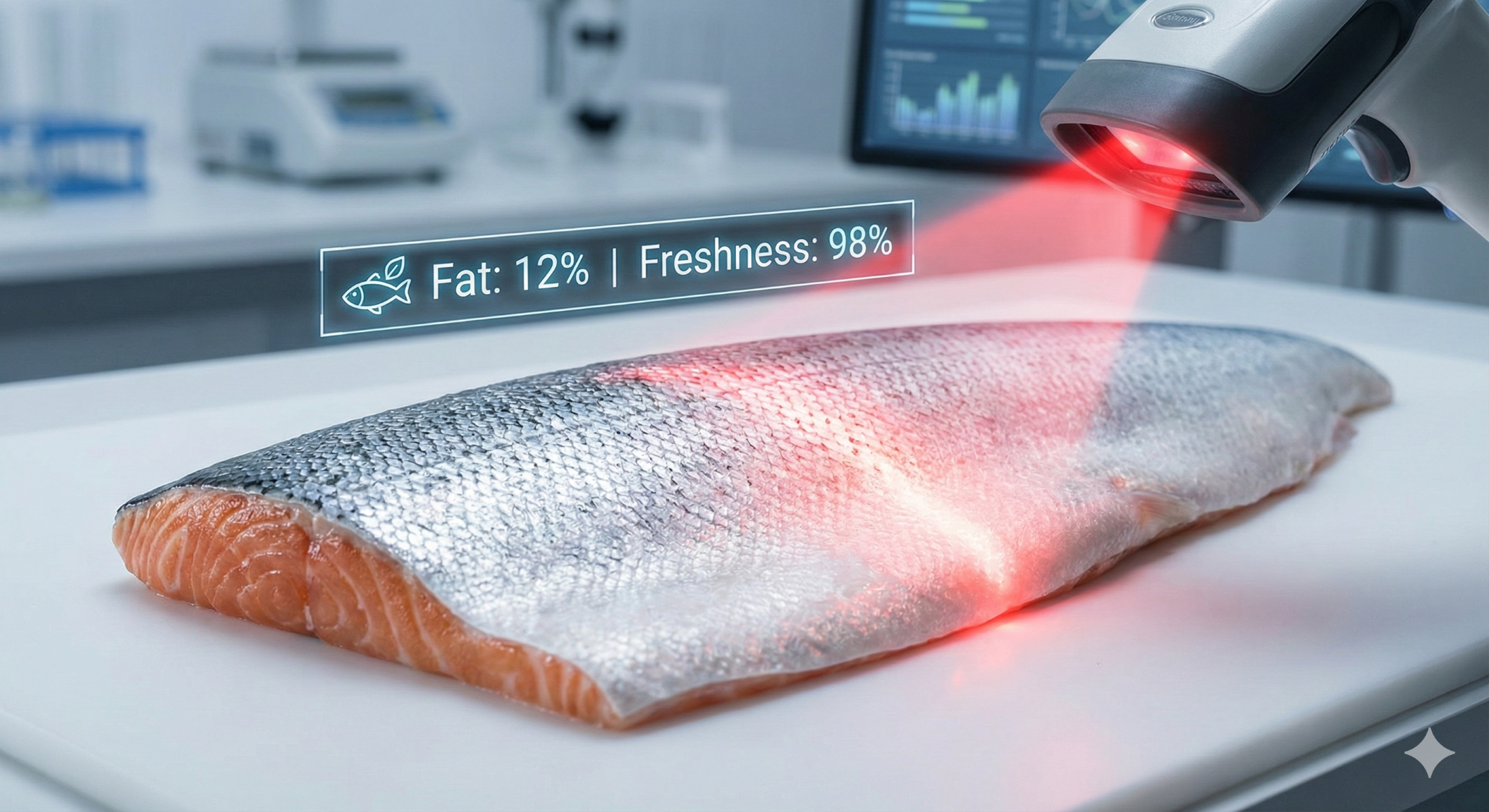
Precision Composition: Fat, Protein, and Moisture
Knowing the nutritional makeup of fish is vital for both processing and labeling. Infrared technology, particularly Near-Infrared (NIR), can instantly determine the levels of:
- Fat and Oil Content: This is crucial for fatty fish like salmon or mackerel, where oil levels affect both flavor and processing requirements.
- Moisture and Protein: NIR sensors can monitor these levels in real-time during the production of surimi (fish paste) or fish meal to ensure a consistent final product.
The Freshness Challenge
Fish is one of the most perishable foods on the planet. As soon as a fish is caught, chemical and biological changes begin. IR spectroscopy can detect these subtle changes at a molecular level:
- Freshness Indicators: By analyzing the breakdown of certain compounds (like ATP), spectroscopy provides a scientific "freshness score" far more accurate than just a visual check
. - Detecting Frozen vs. Fresh: One of the most common issues in seafood retail is selling previously frozen fish as "fresh." IR spectroscopy can identify the cellular damage caused by ice crystals, instantly revealing if a fish has been thawed.
Stopping Seafood Fraud
Seafood is one of the most commonly mislabeled food categories globally. High-value species (like Red Snapper) are often replaced with cheaper alternatives.
- Species Authentication: Every fish species has a unique molecular signature. Infrared spectroscopy acts as a digital fingerprint, allowing inspectors to verify the species in seconds
. - Origin Verification: Advanced spectral models are even being developed to determine if a fish was wild-caught or farm-raised, providing total transparency to the consumer
.
Benefits for the Industry
By integrating IR sensors into processing lines, the seafood industry gains:
Increased Speed: No more waiting for lab results; decisions can be made on the production floor.
Zero Waste: Since the testing is non-destructive, the analyzed fish can still be sold.
Global Consistency: Handheld IR devices allow for uniform quality standards across a global supply chain.
Source Information
Chapter: 9 — Fish and Related Products
Author: Cozette M. Franck
Book: Infrared Spectroscopy for Food Quality Analysis and Control, Edited by Da-Wen Sun