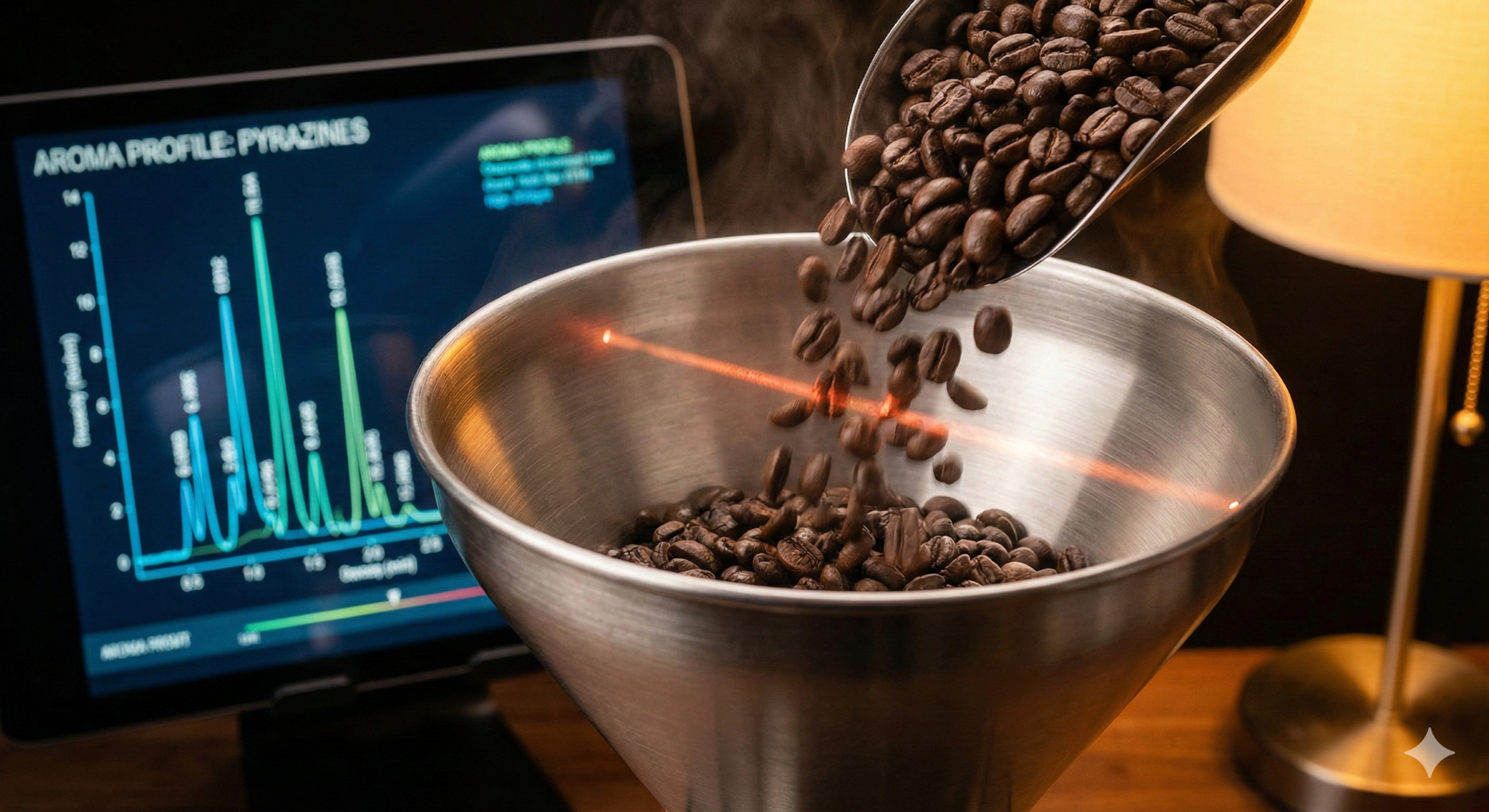
For coffee and tea, the chemical composition determines everything from the aroma to the "mouthfeel."
Coffee Roasting: NIR (Near-Infrared) sensors monitor the roasting process in real-time to detect the precise moment when the beans reach their optimal chemical profile
. Tea Grading: IR spectroscopy can classify tea leaves by their "age," "harvest season," and "quality grade" based on the levels of polyphenols and amino acids. - Caffeine Content: Both tea and coffee producers use IR to instantly measure caffeine levels, ensuring that "decaf" products meet strict regulatory standards
.
Spices are among the most frequently adulterated food products in the world due to their high value.
Detecting Fillers: IR spectroscopy can identify if expensive spices like saffron or black pepper have been "bulked up" with cheap fillers like starch, dyed sawdust, or papaya seeds
. Origin Verification: Advanced spectral "fingerprinting" allows experts to verify if a spice truly comes from the premium region claimed on the label (e.g., Ceylon Cinnamon vs. Cassia).
For manufacturers of "instant" coffee and tea extracts, efficiency is key.
Extraction Monitoring: IR sensors monitor the concentration of solubles during the extraction process, ensuring that the maximum amount of flavor is captured without over-processing
. Moisture in Spices: Maintaining the perfect moisture level in ground spices is critical to prevent clumping and preserve the volatile oils that provide flavor.