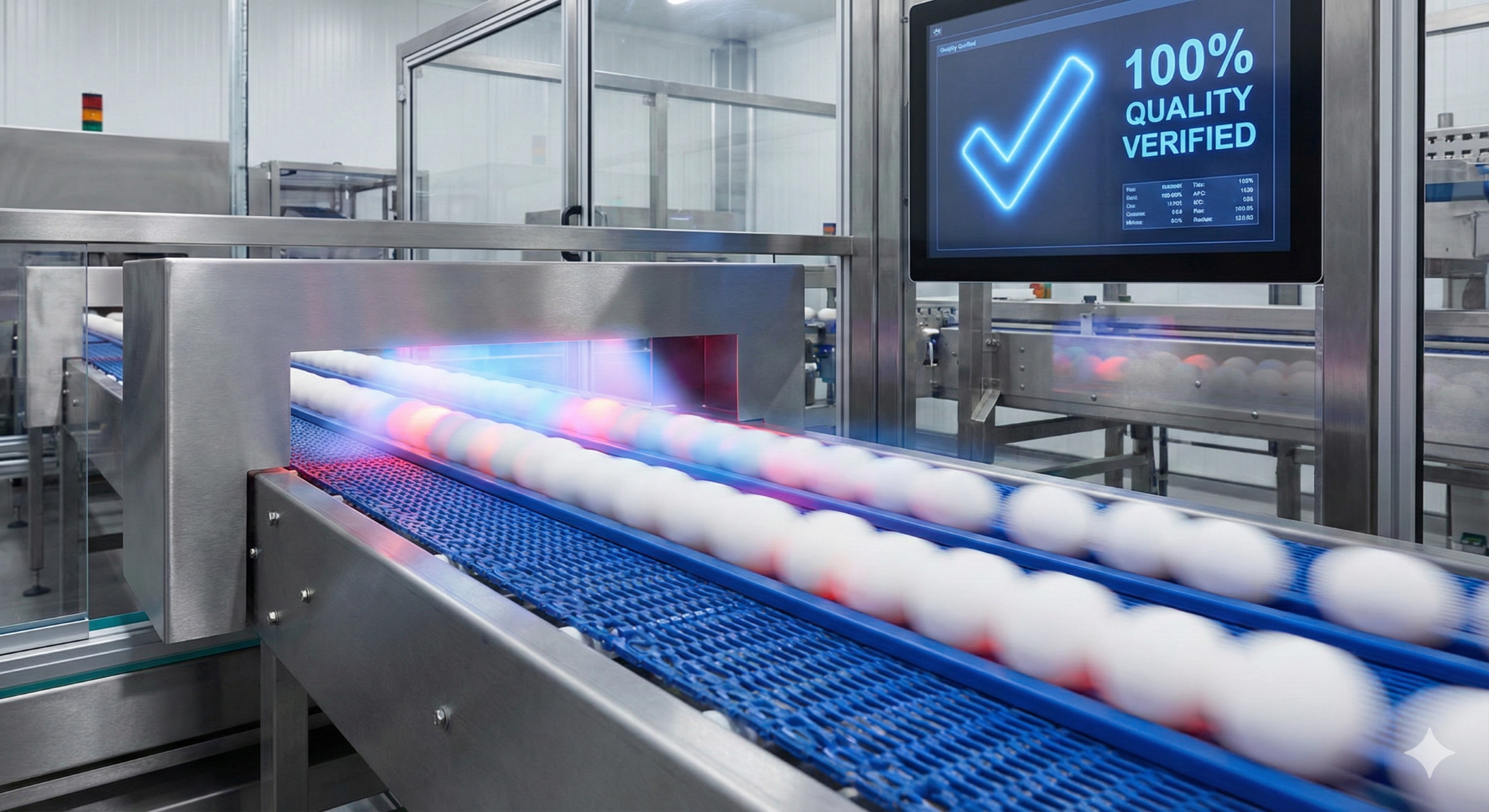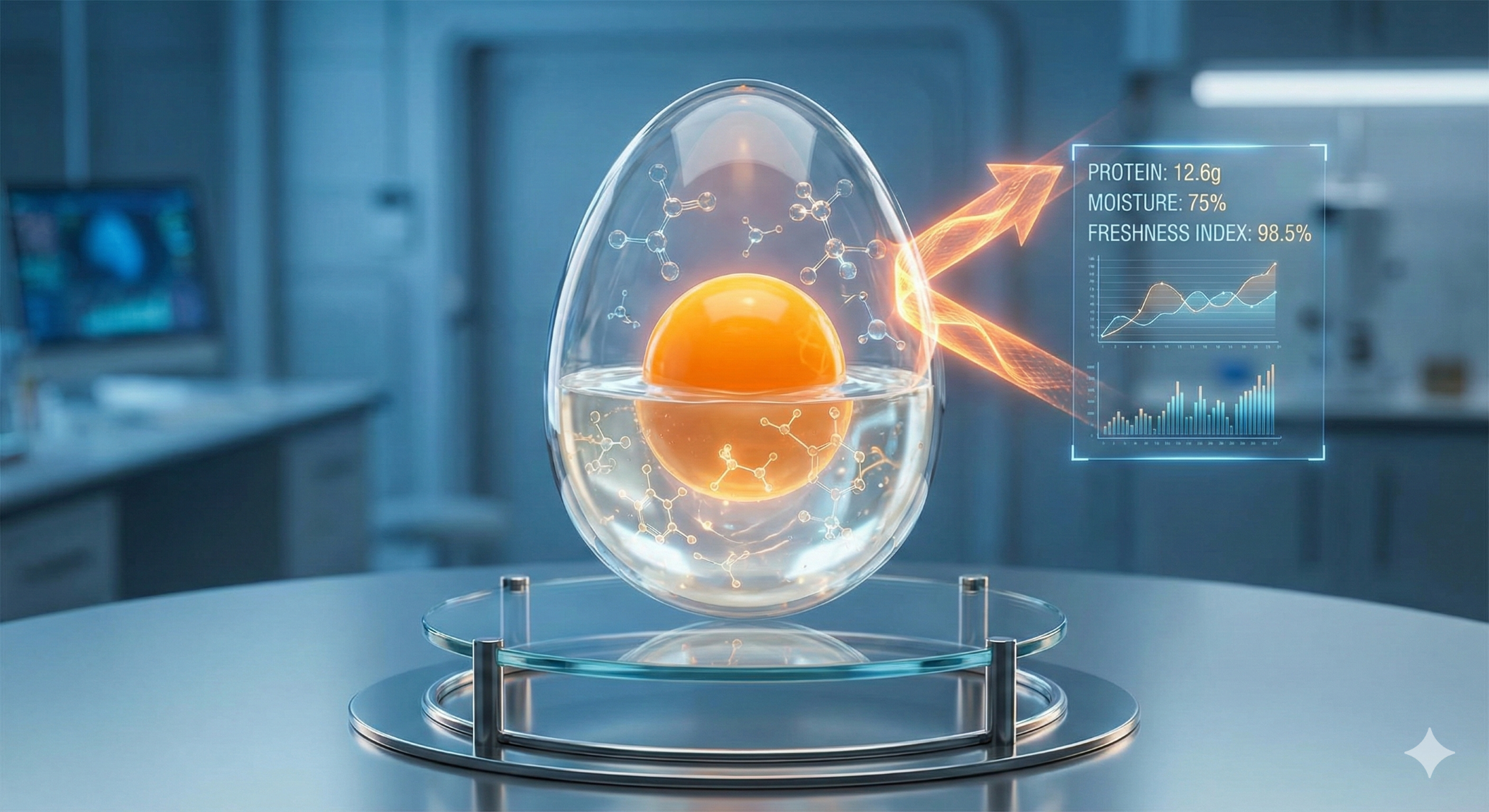
Like other dairy and protein products, the nutritional value of an egg is defined by its protein and fat content.
Liquid Egg Products: For manufacturers of liquid or spray-dried eggs, Near-Infrared (NIR) spectroscopy is used to instantly measure moisture, fat, and protein levels.
Consistency in Baking: By ensuring the exact composition of egg products, industrial bakers can guarantee the texture and rise of their products every single time.
The shell is the first line of defense against contamination. A weak shell leads to breakage and potential bacterial entry.
Shell Strength: IR technology can analyze the mineral density and thickness of the eggshell, helping producers identify batches that might be at risk during transport.
Objective Color Grading: While consumers often have a preference for white or brown eggs, producers use IR devices to provide an objective measurement of shell color, ensuring uniformity in retail cartons.
An egg’s internal structure changes as it ages. IR spectroscopy can "see" these changes through the shell.
Haugh Unit Prediction: The Haugh unit is the industry standard for egg freshness (measuring the height of the egg white). IR models can predict this value non-destructively, allowing for rapid sorting.
Blood Spot Detection: Advanced spectral imaging can detect internal defects like blood spots or "meat spots" that are unappealing to consumers, removing them from the line automatically.